
watering tips for beginners – FAQ’s
- What is the best way of watering plants?
- Is it OK to water plants at night?
- Does watering correctly prevent diseases?
- How to water plants in different types of pots?
- How to water plants in different types of soil?
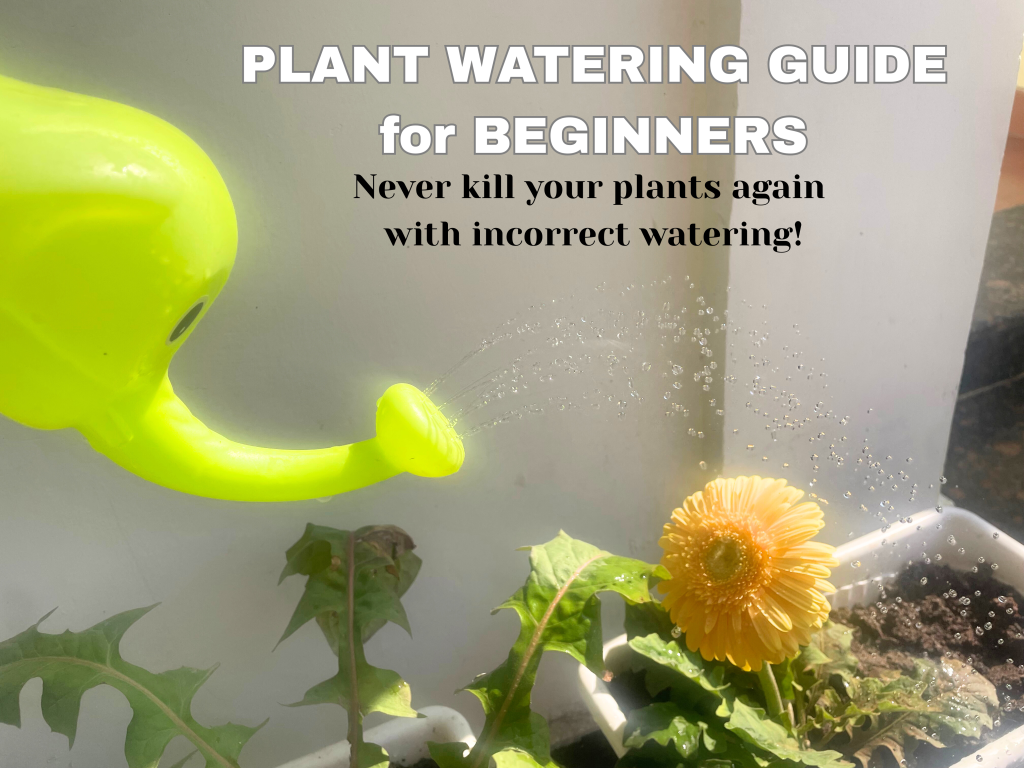
Watering may seem like the simplest garden task BUT contributes significantly to plant health.A lot of your garden’s growth depends on HOW & WHEN to water it. So let’s talk about a few frequently asked questions by beginners about watering a plant correctly!
Correct watering is also the key to preventing many plant diseases.
1. WHAT IS THE BEST TIME TO WATER PLANTS – MORNING OR EVENING?
This is the trickiest! The basic requirement is that the roots get ample time to soak up the water before it is evaporated by the sun. e.g. In summers water early in the morning so that the planters do not dry out immediately or in the evening after the glare has lessened. In winters, watering in the morning is the best choice.
2. HOW MUCH TO WATER PLANTS?
If the soil looks dry or the leaves appear wilted, water it! All plants have varying watering requirements. To fix a schedule, water a plant thoroughly once and note after how long does it demand water again.Do this for a few days to figure out its schedule. Group plants with similar timings together. Generally planters require water once a day in summers and once every 2 days in winters with moderate sunshine. Rainy and cloudy days are obvious exceptions. Gardening does benefit from a bit of common sense, isn’t it?
- If leaves appear dry, crumbly or shrunk, the plant needs water.
- If they appear yellowing and wilted, over-watering may be one of the causes.(Because it may also be a deficiency)
- If you notice thinning or rotting at the base(specially annuals like gerbera), either you are watering too much or it isn’t draining properly.
Plants must never float or stand in water! (unless you are growing rice 😛 ) This applies to perennials- Water thoroughly then wait for the soil to almost dry out before watering again. This strengthens the root system of the plant.
3. WATERING PLANTS CORRECTLY TO PREVENT DISEASES
IF you like to wash the leaves of perennials, watering early in the morning is the best choice so that the leaves can dry out. Damp and dark breeds diseases so NEVER water plants after sunset or in the dark.
With the abundance of delicate annuals in winters, it is important to let the wet leaves dry out else they may rot. This is the most common reason for annuals dying. This is specially true for plants that are grouped together with less air circulation.
4. WATERING PLANTS ACCORDING TO PLANTER TYPE
- Porous(terracotta, cement) planters allow water to evaporate more quickly than plastic.
- Smaller ones(obviously) dry out much more quickly than larger ones.
For most annuals, i like to use small to medium planters. In winters, i pick terracotta since it helps with drainage and prevents fungus. In summers, my choice is plastic to retain water OR terracotta kept in partial shade.
5. HOW TO WATER PLANTS ACCORDING TO SOIL TYPE
- Yellow or clayey soil compacts easily and isn’t the ideal. It does not allow water to even pass through when completely dry, forget retention, so before you worry about watering, amend it with some compost or cocopeat.
- Sandy soil allows quick drainage and demands more water.
- Cocopeat, perlite(read more here) retain water and reduce the need. Take care of drainage with these. (Learn the uses of cocopeat, perlite and vermiculite in garden HERE)
- Compost helps soil retain adequate amount of water along with providing adequate amount of nutrients. If visible on the surface it must appear rich, dark brown.
JOIN OUR GARDENING COMMUNITY ON FB FOR MORE TIPS AND TRICKS!

Here one of the recently invented innovative watering tool https://www.facebook.com/wiserwatering/. It’s GUARANTEED TO SAVE WATER! If savings are below 20% you’ll be refunded 120% of the price paid for the WiserWand and the WiserWaterMeter. How much water will you save? Take the WiserWaterSaver Challenge and find out. Don’t expect a refund:) Savings average between 40-60%.