
Tulsi is the most commonly grown herb in most Indian households but also known worldwide for it’s healing properties. Here’s a quick fact-sheet about GROWING TULSI PLANTS.
- You can grow 2 types of Tulsi at home – Rama Tulsi (Green), Shyama Tulsi (Purple/Black).
- Tulsi is also known as Holy Basil. It is different from the Italian basil grown as seasoning though they are closely related.
- It is easier to grow Tulsi from cuttings than seeds.
- Tulsi plants can grow in size of pots easily but minimum 6″ is ideal. The bigger the pot, the better Tulsi plant grows.
- The more leaves you harvest, the more lush it grows.
- Tulsi roots like to spread and do not go down very deep so plant it exclusively in a single pot.
- Keep the plant clean and remove seeds regularly to prevent your Tulsi plant from dying.
From being worshipped to consumed for boosting immunity to warding off evil and being an integral part of prayer, Tulsi holds a special importance in almost each Indian household.
What is the best way to Propagate Tulsi Plants?
The best way to grow new Tulsi plants is by rooting a 6″ cutting in soil or water.
- Take a small fresh cutting
- Remove the bottom leaves
- Insert into sandy soil OR place in a jar of water
- Keep at a shaded spot outdoors
- Check for new leaves periodically
- Change water frequently
- Transplant only when it has grown substantially
Can you grow tulsi from seeds?
Yes. Tulsi often self-seeds. The seeds that fall-off from the plant itself can sprout into new plants. Every Tulsi bush has multiple smaller ones growing around it. It propagates naturally. If you are sowing seeds yourself, it might take longer to form a new plant.
How to protect Tulsi plant from pests and keep it disease-free?
- Applying a neem and hing spray regularly can help with keeping Tulsi pest-free.
- Water only during the day so it allows time for the excess moisture to evaporate from leaves.
Which homemade organic fertiliser is best for Tulsi plants?
You can use diluted buttermilk to fertilise Tulsi every 20-25 days. Mix 1 tsp. of curd ( yogurt) in 1 ltr. of water and add to the base of plants. do not spray. This helps Tulsi plants grow healthier and bigger.
CHECK THIS ARTICLE ABOUT PROPAGATING HERBS
How to identify Shyama Tulsi from Rama Tulsi? What is the difference?
- On first glance the leaves might loom the same. But Shyama Tulsi (Black) leaves have a purple tinge and look even more black in cold weather.
- The stems have a visible difference. Shyama Tulsi has purplish-black stems.
- There is a also a slight difference in the fragrance.
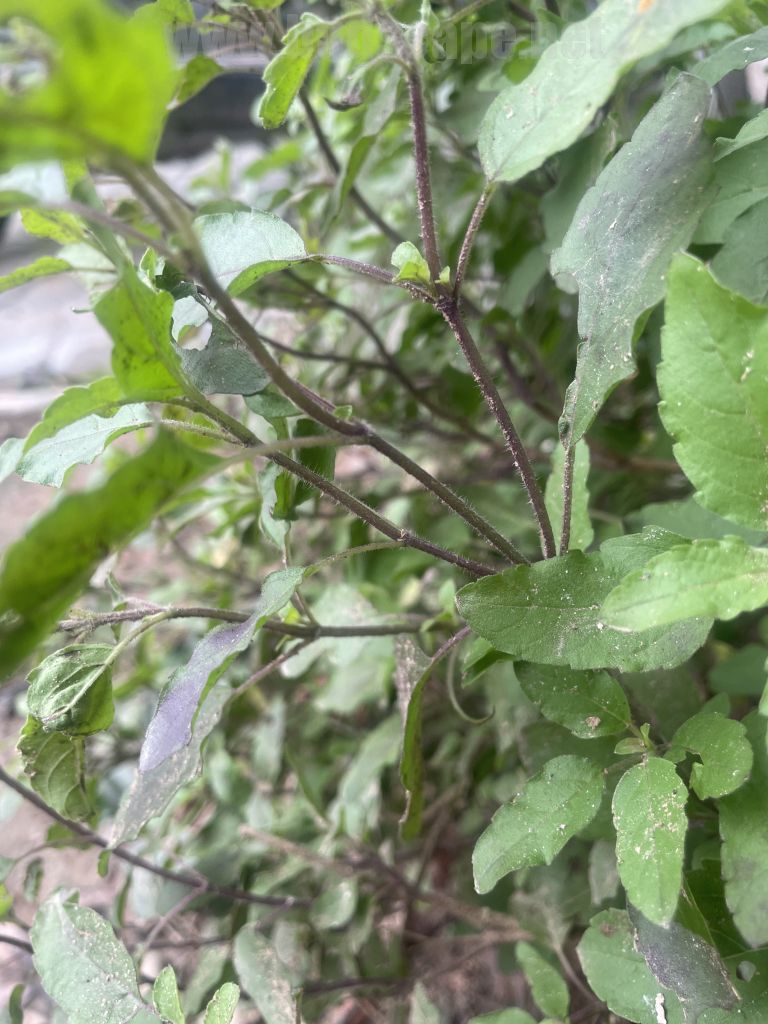
IDENTIFY BLACK SHYAMA TULSI STEMS
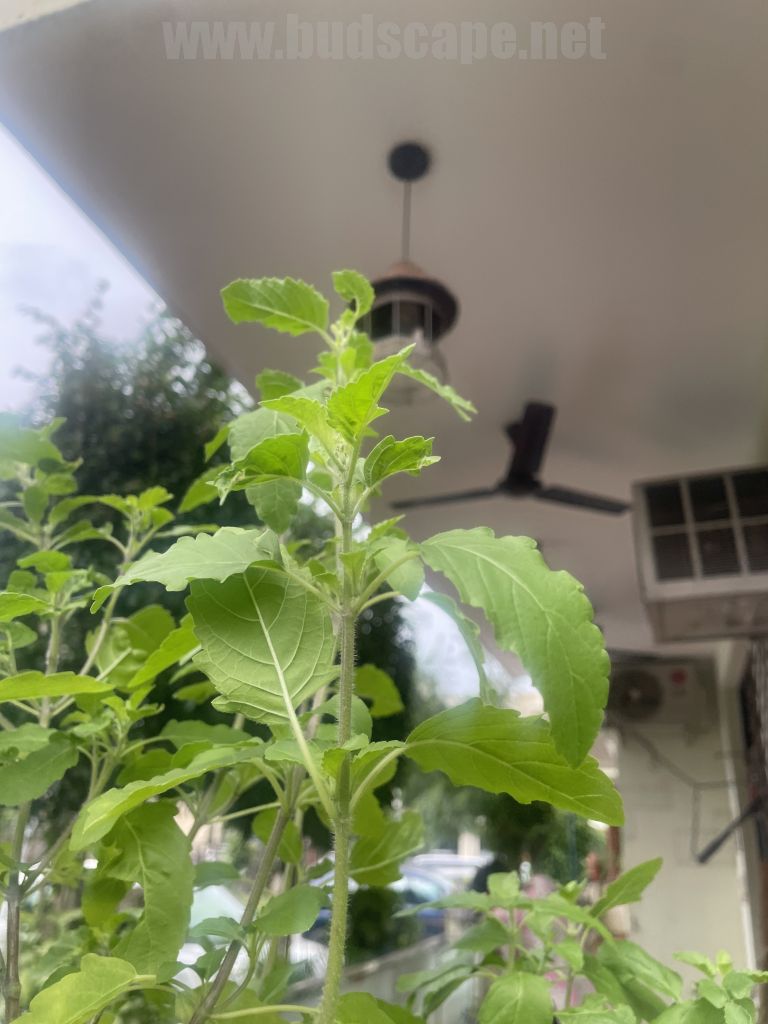
IDENTIFY GREEN RAMA TULSI STEMS
FAQ’s about GROWING HEALHTY TULSI PLANTS AT HOME – Answering 10 common questions
Q1. Which pot is the best for growing Tulsi?
- Your first choice should be terracotta (not any earthenware). It is porous and allows the roots to breathe.
- Also, there are lesser water logging and fungal issues with a traditional terracotta container (mitti gamla) . The chances of root rot are also minimized.
- Do not use a pot that is too small. Anything over 8″-9″ dia. is ideal for growing Tulsi.
- Other good enough choices are cement or ceramic pots (unpainted/unglazed )
- Special pots are also available for for growing Tulsi plants in balcony or terrace garden. BUY HERE – TERRACOTTA PLASTIC
Q2. Can Tulsi plant grow indoors?
NO. You may be able to keep it near a well-lit window for a few days but Tulsi needs proper sunlight to thrive.
Q3. Which soil is suitable for growing Tulsi?
- It doesn’t have any special needs but well-draining soil is always great for roots to grow. Airy soil allows roots to penetrate better and enhances overall growth. It also prevents soil-borne diseases.
- If your local soil is too heavy and water doesn’t seem to drain easily or if the tulsi plant appears to turn black at the bottom of stem, then add some sand to the soil and water it lesser than you usually do.
Q4. Does Tulsi grow better in ground or in containers?
- It does well at both places, subject to good soil plus other factors like avoiding excess watering.
- Tulsi plant growing in ground does usually sustains better in winters than the one in a medium sized pot.
Q5. Is plastic container suitable for growing Tulsi?
- Not really. It can lead to drainage issues plus it heats up in summers and can cause root burn.
- Keeping a terracotta pot inside a plastic container or a fibre pot is an aesthetic choice.
Q5. Should we remove tulsi seeds?
- Yes. For a lush Tulsi plant, pinch off the seeds formed and you will see better growth with more leaves.
- Do this only twice or thrice during the growing season when the plant is full of seeds.
- They can be used while making tea instead of throwing back in the soil.
Q6. Why is my tulsi plant dying?
- Most often, over-watering leads to rotting of roots.
- Please note it is natural for Tulsi leaves to fall off during extreme winters (just like curry patta) and the plant stays dormant.
Q7. How to protect Tulsi plant in winters?
- The plant can be covered with a thin cloth and it will sprout new leaves when the weather is warmer. Please water only after every few days in minimum quantity just to ensure that it doesn’t dry off completely.
- Even plants that appear to be dead, revive back in appropriate weather. If the stem is thicker, you can scratch it a bit to check for green sign of life.
Q8. Should we trim Tulsi plant or remove leaves regularly?
- You can harvest the leaves regularly and more will grow.
- Trimming the plant itself is not advisable but removing excess seeds by hand helps it grow better.
Q9. Which weather is suitable for growing Tulsi?
- Tulsi plant thrives in summers with full sunlight and adequate water. Winters make it dormant.
Q10. Does Tulsi plant need fertilizer?
- Not really. Tulsi can thrive in almost any type of soil and does not need much fertilization.
- Regular cleaning and general maintenance is good enough to grow a healthy plant.
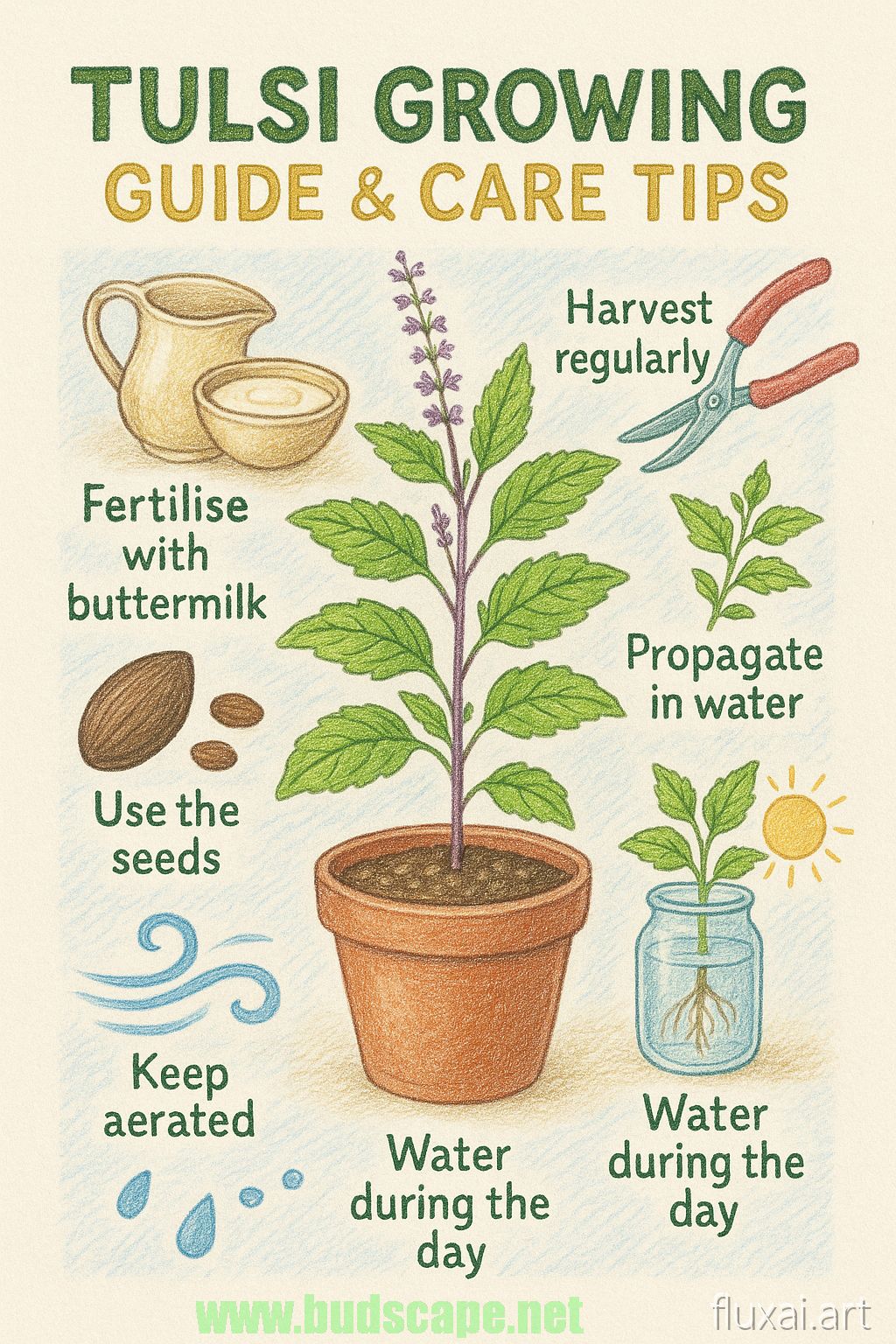
TULSI GROWING & CARE GUIDE
HEALTH BENEFITS OF TULSI PLANT
Is consuming tulsi beneficial for health?
Medically, it is debatable. But it is worshipped and highly regarded due to its ability to promote good health and enhance general well-being. Shyama Tulsi is generally considered good for health when infused in tea or water. It is used to treat common cold, sore throat and maintain general well-being.
How to consume tulsi leaves?
You can infuse them in teas or in boil water itself. They can also be soaked overnight and consumed next morning. It is not advisable to chew tulsi leaves.
HAPPY GARDENING 🙂
JOIN OUR GARDENING COMMUNITY ON FB FOR MORE TIPS AND TRICKS!

I loved this post on holy Tulsi plant! I take inspiration from my fellow bloggers.